Austria's Licensing Framework Governs Access to No-Deposit Rewards and Slot Incentives
Xander Carter · Aug 18, 2026

Austria's Licensing Framework Governs Access to No-Deposit Rewards and Slot Incentives
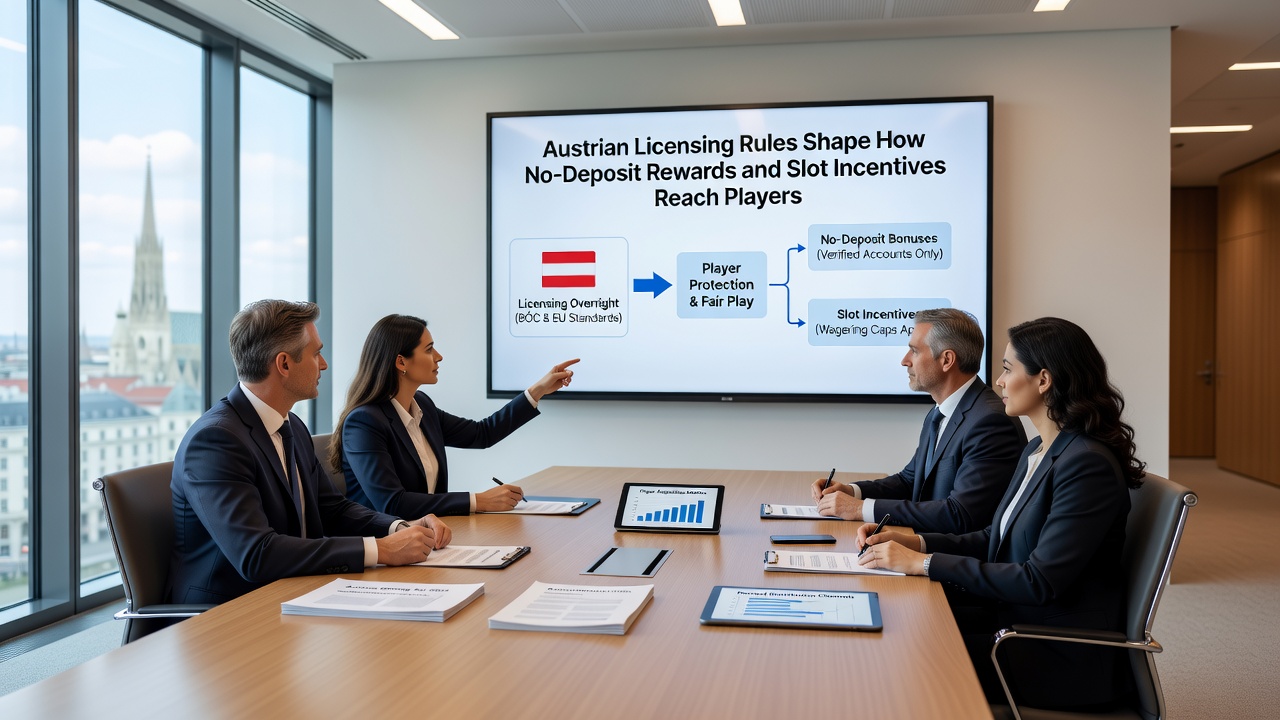
Austria maintains a tightly controlled licensing system that determines which operators may deliver no-deposit rewards and slot incentives to residents, with rules enforced through the national Glücksspielgesetz and overseen by the Federal Ministry of Finance. Operators must secure a concession before offering any form of bonus, including those that require no initial deposit, and this requirement directly limits how promotions reach players across the country. Data from regulatory filings show that only a small number of licensed entities operate legally, which means many international sites exclude Austrian users from standard no-deposit offers to avoid penalties.
Under current statutes, every bonus promotion must undergo review for compliance with responsible gambling standards, age verification protocols, and maximum payout caps that vary by license type. Those who study the market note that these checks often delay the release of new slot incentives by several weeks while authorities examine the terms. Figures from the ministry indicate that approved no-deposit rewards typically cap at €10 or equivalent free spins, with strict wagering requirements that cannot exceed 35 times the bonus value.
Key Licensing Categories and Their Impact on Promotions
Concessions fall into separate categories for land-based casinos, online sports betting, and online casino games, each carrying distinct conditions on how incentives may be advertised and distributed. Online casino licenses demand additional technical audits of random number generators and bonus payout systems, which raises the bar for operators seeking to launch slot promotions quickly. Observers note that this structure creates a clear separation between what international platforms can offer globally and what reaches Austrian accounts.
Research indicates that license holders must maintain player funds in segregated accounts and report all bonus redemptions monthly, creating administrative overhead that discourages frequent no-deposit campaigns. In practice, many licensed operators release slot incentives only during seasonal windows or after new game certifications pass inspection. This pattern produces fewer but more regulated promotions compared with less restrictive jurisdictions.
August 2026 Regulatory Updates and Expected Changes
Amendments scheduled to take effect in August 2026 introduce new reporting obligations for bonus conversion rates and require real-time monitoring of player activity tied to no-deposit rewards. Licensed operators will need updated software interfaces that flag unusual redemption patterns, which could further slow the rollout of slot incentives. Those who track the sector expect the changes to increase compliance costs and reduce the total number of active promotions available to Austrian players by the end of that year.
The ministry has published guidance stating that any bonus exceeding the new thresholds must receive individual approval, shifting the approval process from batch reviews to case-by-case evaluations. This adjustment aligns Austria more closely with emerging European standards while preserving the domestic emphasis on player protection.
Cross-Border Considerations and Enforcement Practices
Because Austria participates in the European single market for certain services, unlicensed foreign operators sometimes attempt to serve residents through VPNs or mirrored domains. Enforcement actions documented in official reports show that authorities block access to non-compliant sites and impose fines on intermediaries that facilitate such access. Players who attempt to claim no-deposit rewards from unlicensed sources risk account closures and forfeiture of winnings under the existing legal framework.
According to statistics released by the European Gaming and Betting Association, Austria processes fewer cross-border bonus claims than neighboring countries with lighter licensing regimes. The difference stems directly from the requirement that every incentive must originate from a concession holder located within the national jurisdiction or holding an equivalent recognized license.
Practical Effects on Player Access
Those who examine player behavior data find that Austrian residents registered with licensed operators receive slot incentives at a lower frequency than users in markets with multiple competing license types. The single-concession model reduces promotional competition, which in turn limits the variety of no-deposit rewards that appear in player accounts. Yet the same structure provides stronger guarantees that any received bonus complies with transparent terms and payout limits.
Operators holding valid concessions often publish their current incentive calendars on official portals, allowing players to track upcoming slot promotions without navigating gray-market sites. This transparency stems from the licensing condition that all marketing materials must carry clear regulatory identifiers and direct links to the terms of service.
Conclusion
Austria's licensing rules create a controlled environment where no-deposit rewards and slot incentives reach players only after meeting detailed compliance checks and administrative approvals. The framework prioritizes regulatory oversight over promotional volume, resulting in fewer offers but higher certainty that each promotion follows legal requirements. Updates planned for August 2026 will add further reporting layers, reinforcing the existing pattern. Players seeking these incentives must therefore rely on operators that hold active Austrian concessions to ensure lawful access and protection under national law.